

You’ve done the work. You’ve researched Puerto Vallarta neighborhoods, you know the difference between the Romantic Zone and Versalles, and you’ve started picturing your ocean view mornings on a terrace with the Sierra Madre Mountains in the backdrop. Then someone asks: “What’s your healthcare plan?” And suddenly the whole thing feels more complicated. I’ve had […]
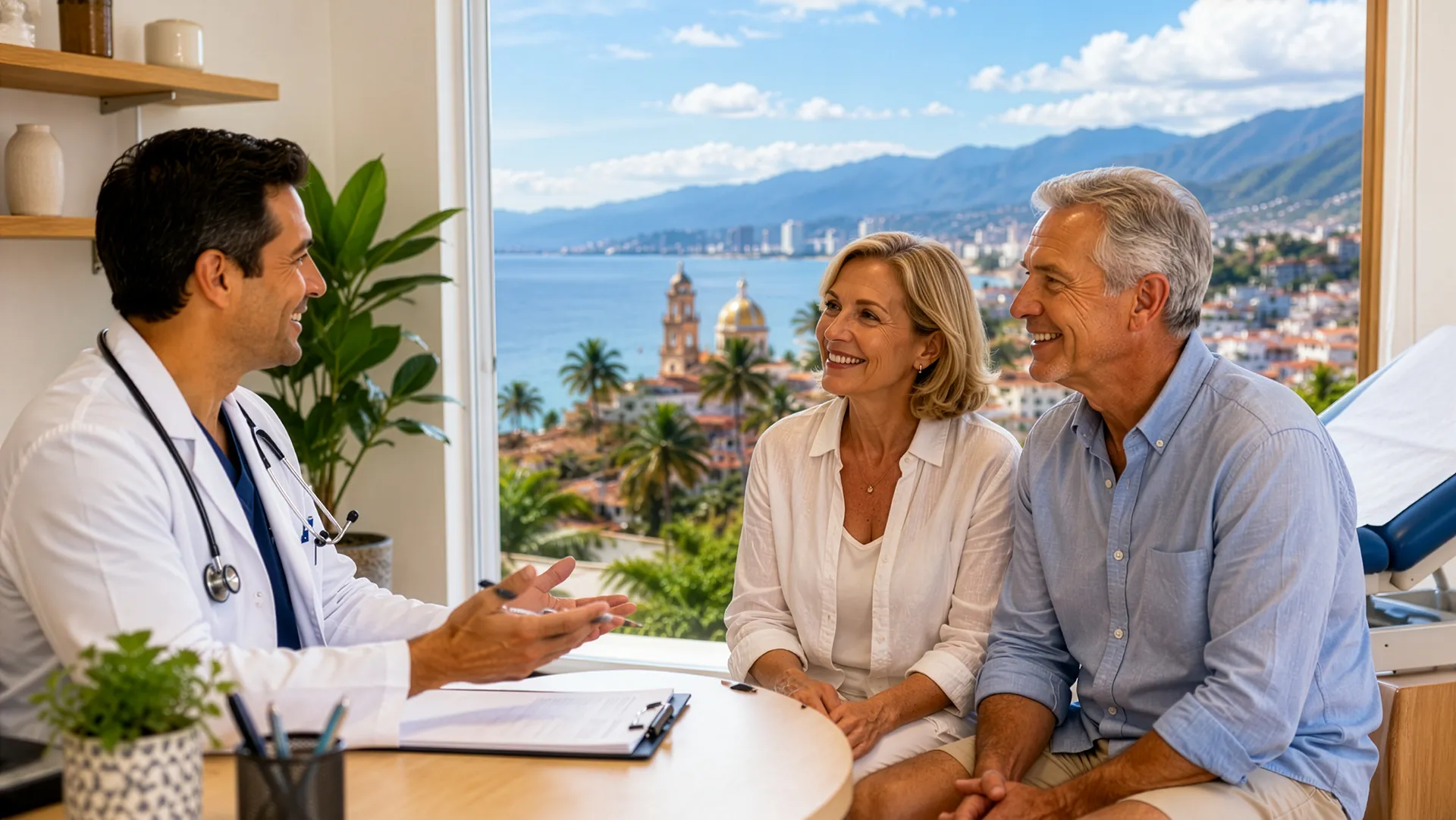
You’ve done the work. You’ve researched Puerto Vallarta neighborhoods, you know the difference between the Romantic Zone and Versalles, and you’ve started picturing your ocean view mornings on a terrace with the Sierra Madre Mountains in the backdrop.
Then someone asks: “What’s your healthcare plan?”
And suddenly the whole thing feels more complicated.
I’ve had this conversation dozens of times. People think they’ve covered their bases, and then they realize they haven’t thought through health insurance at all. So I sat down with Brett Lamar of Expat Insurance, one of the sharpest brokers in this space, to get you the real picture.
It’s technically not false. There are public healthcare options in Mexico. But if you’re used to private hospitals and timely access to specialists, the public system is not where you want to be when something serious happens. Brett has seen it firsthand, and his take is straightforward: public hospitals are often underfunded and overcrowded, and even many Mexican nationals who have access to public coverage still choose private insurance when they can afford it.
If you’re planning your retirement in Puerto Vallarta, healthcare coverage is a foundational decision, right alongside the real estate and the residency. It’s not a detail to circle back to later.
Most expats shopping for coverage are looking at major medical or high-deductible catastrophic insurance. These policies are built for the big stuff; hospitalizations, surgeries, serious diagnoses. What they typically don’t cover is the routine: dental cleanings, annual eye exams, standard lab work.
And honestly? That’s probably fine, because most of those routine services in Mexico are genuinely affordable out of pocket. A GP visit might run you $30-50 USD. Bloodwork at a good private lab is not going to break anyone. But that ICU stay, that cancer treatment, that major surgery…that’s what the insurance is for. Plan accordingly.
This depends heavily on your life. Are you cutting ties with the U.S. completely, or will you be going back to visit family for two or three months a year? Brett sees increasing demand for coverage that includes the United States, not because people expect to use it often, but because they want access to institutions like Mayo Clinic or MD Anderson if something rare and serious comes up.
For buyers who are fully committing to Puerto Vallarta as a primary residence, Mexico-plus-Latin America coverage is often sufficient and considerably more affordable. For snowbirds or those splitting time between countries, worldwide coverage with U.S. inclusion is worth the extra premium.
If you’re a year out, start educating yourself on what’s available and what it costs. Actual shopping for coverage makes sense about two to six months before you need it – insurance products and pricing shift year to year, so doing it too early wastes effort. Less than two months out, you’re rushing a decision that deserves real thought.
This is the section worth reading twice.
When you arrive at a private hospital, the first question is: how are you paying? Even with insurance, you’ll typically need to put a credit card on hold. Brett mentioned common holds ranging from $1,000 to $5,000 USD depending on why you’re being admitted. His clients are told to WhatsApp him from the hospital, and his team coordinates with the hospital administration, handles documentation, and works toward getting a Guarantee of Payment in place if the admission is longer-term.
If you’re discharged the same day, you may pay out of pocket and then submit for reimbursement or deductible credit. Longer admission with prior approval? The insurer may bill directly.
And if you don’t have a credit card or any coverage? Hospitals will stabilize you, but if payment can’t be arranged within 48-72 hours, a transfer to a public facility is what typically happens next. That’s the reality nobody puts in the brochure.
Puerto Vallarta has no shortage of people willing to sell you something. Brett’s warning signs are worth knowing. Watch out for brokers who aren’t licensed, who hand you off to the insurance company the moment the sale is done, or who tell you that you can keep your Medicare Advantage plan in Mexico full-time. (For snowbirds doing a few months, that may work. For full-time residents outside your U.S. service area? It’s a problem waiting to happen.)
A good broker stays in your corner after the sale. That’s how you know you’ve found one worth working with.
At Taniel Chemsian Properties, we’ve always believed that buying real estate in Puerto Vallarta is really about designing a life, not just acquiring a property. The view from the terrace matters. The neighborhood matters. And so does knowing that if something goes wrong with your health, you have a plan that actually works.
The right condo isn’t just about the finishes and the location. It’s about peace of mind at every level.
Email us at [email protected]. A human will answer your questions, not with a bot. And if you want a clear, no-hype look at the entire buying process before we even talk, grab your free copy of the Puerto Vallarta BUYER’S GUIDE at www.tanielchemsian.com. It covers everything from first conversation to keys to your new home in Mexico. No sign-up wall, no sales pitch…just the information you need to decide with clarity and confidence.
Email: [email protected]
Free Buyer’s Guide: www.tanielchemsian.com
Mexico: +52.322.688.7435
USA/Canada: +1 323.798.8893
"*" indicates required fields


